Silicone Roof Sealing
Seamless silicone sealing and coating that stops leaks and reflects summer heat on low-slope roofs.
Learn moreRoofing Systems & Installation
Torch-applied modified bitumen for flat and low-slope roofs on Los Angeles homes, additions, garages and small buildings.
Not every roof in Los Angeles is pitched. Mid-century homes, duplexes, room additions, garages, patio covers and small commercial buildings often have flat or low-slope roofs, and shingles and tile do not work on a surface that does not shed water on its own. These roofs need a membrane, and torch-down is one of the most proven ones.
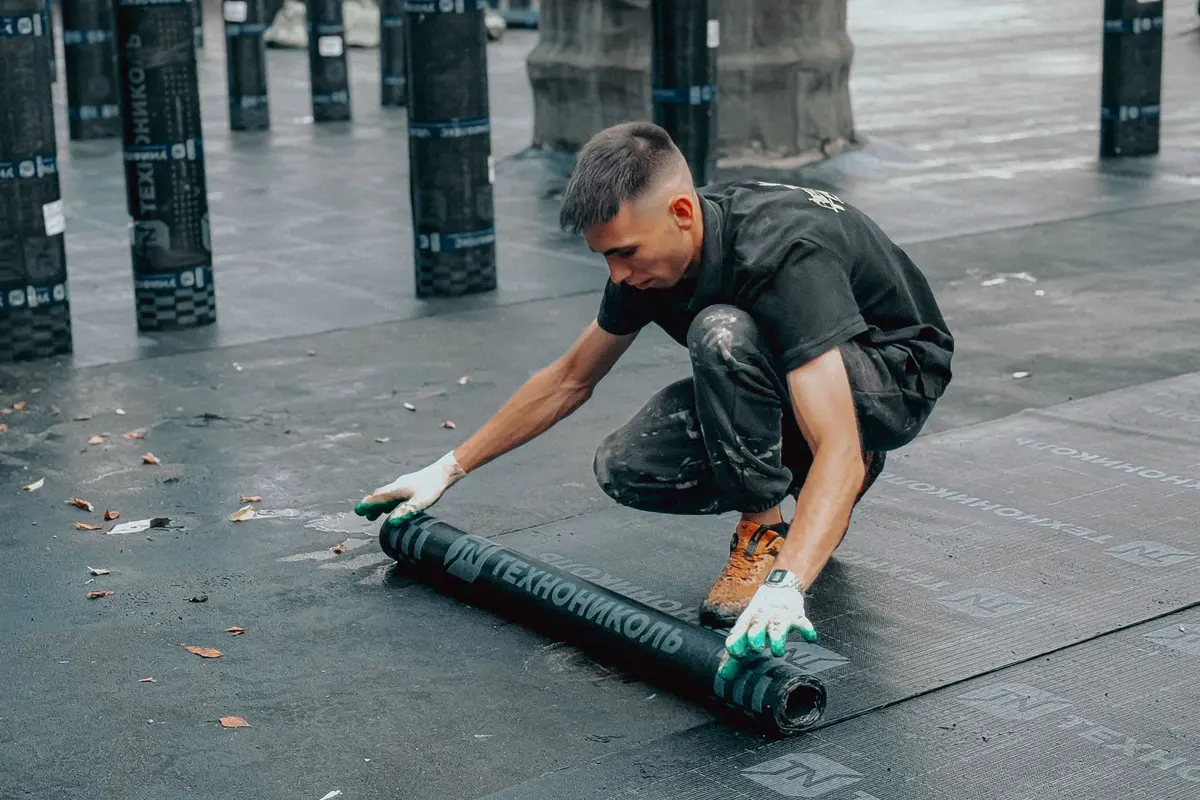
Torch-down roofing uses rolls of modified bitumen, an asphalt-based material reinforced for strength and flexibility. The installer heats the back of the roll with a propane torch as it is rolled out, melting it into a bond with the layer beneath. Laps are overlapped and sealed so water has nowhere to go but off the roof.
Because the work involves an open flame, it is a job for a crew that knows hot-work safety and where torch application is and is not appropriate. Reyes Roofing includes torch-down among its core roofing services, for new flat roofs and for replacing membranes that have cracked, blistered or opened at the seams.
We check the membrane, drainage and deck, and decide whether the roof can be covered or needs to come off first.
The surface is cleaned and repaired, and edge metal, drains and penetrations are prepared so the new layers have a sound base.
A base sheet or first layer goes down, fastened or torch-bonded according to what is underneath.
The cap sheet is heated and rolled out in overlapping courses, with each seam checked for a continuous bead of melted bitumen.
Walls, vents and drains are flashed and sealed, and the roof is inspected afterward as part of normal hot-work safety.
Flat roofs can look simple, but the price depends on several things:
Many roofing companies avoid flat roofs or push every customer toward the same product. Reyes Roofing lists torch-down as one of its main services, which means you can ask about it directly instead of explaining what a modified bitumen membrane is.
If your roof would be better served by silicone coating or another approach, we say so, because the right system depends on the condition of the roof you already have.
We work on flat and low-slope roofs across Los Angeles and the northeast San Fernando Valley. See our Sun Valley roofing page and Los Angeles roofing page.
It is a modified bitumen roofing membrane that is rolled out and heated with a propane torch so the underside melts and bonds to the layer below. Layers are lapped and sealed at the seams to form a continuous waterproof surface for flat and low-slope roofs.
A well-installed torch-down roof commonly lasts somewhere in the range of 10 to 20 years, depending on the number of layers, the quality of the seams and how much sun and standing water the roof sees. Regular checks of seams and flashings help it reach the long end.
It is safe when handled by a crew that treats it as hot work: keeping the flame away from combustible materials, following fire-safety practice during the job and checking the roof afterward for smoldering. Where the building construction makes an open flame a bad idea, there are cold-applied or self-adhered alternatives.
Sometimes. It depends on what is already there and whether it is dry underneath. If the old roof is saturated or the deck is soft, covering it traps moisture, and a tear-off is the right call. We check before we recommend either.
Standing water that is still there a couple of days after rain is a sign the roof is not draining well, and it accelerates wear on any membrane. A new roof can be installed with better slope or drainage, and silicone coating is another option because it tolerates ponding.
Seamless silicone sealing and coating that stops leaks and reflects summer heat on low-slope roofs.
Learn more
Failed flashing, lifted shingles, cracked tile and worn seams fixed at the source.
Learn more
Tell us about the building and the roof and we will follow up with a free quote.